
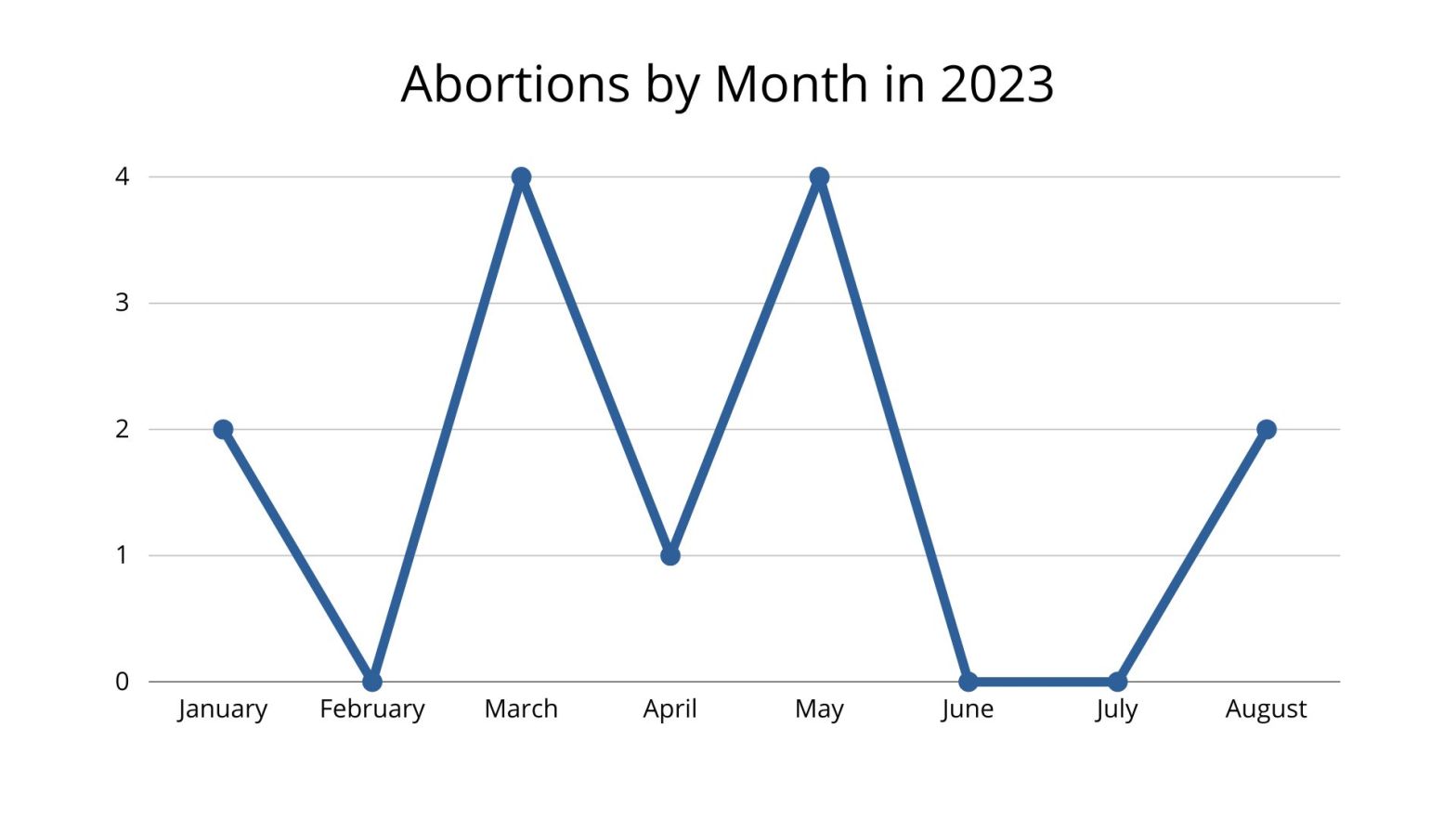
LOUISVILLE, Ky. (KT) – Kentucky’s Cabinet for Health and Family Services reported that two abortions were performed in August 2023. At least one was an ectopic pregnancy removal.
Under Kentucky law, abortions are permitted to protect the life and health of the mother. The exception allows physicians to perform an abortion if he or she decides, within “reasonable medical judgment,” that the abortion is necessary to prevent death, a substantial risk of death or serious damage to a life-sustaining organ of the pregnant woman.
Ectopic pregnancies are life-threatening because a fertilized egg implants and grows somewhere that cannot support a developing fetus, such as a fallopian tube, ovary, cervix or cesarean scar. The growing fetus can eventually cause a rupture, leading to major internal bleeding.
August 2023 was the second time this year an ectopic pregnancy removal was reported as a termination procedure to the Cabinet of Health and Family Services. In January, the Cabinet reported a “laparoscopic ectopic rejection.” Those two instances are the first since the Cabinet started releasing abortion data in 2017 that ectopic pregnancy-related procedures were reported as terminations.
The “laparoscopic ectopic pregnancy removal” occurred at seven weeks gestation on an unmarried, Hispanic Kentucky resident.
The second reported abortion was performed at 10 weeks gestation on an unmarried, non-Hispanic Kentucky resident via a “uterine wedge resection” termination procedure. That abortion method has never been listed in Kentucky abortion records.
Unlike previous records released to Kentucky Today when abortion was legal in the commonwealth, the Cabinet did not provide the following data: age, race or Hispanic origin of the pregnant women, the facility where the abortions were performed, previous live births or other terminations. Those data points have not been issued by the Cabinet since July 2022.
Data related to abortions provided in Kentucky are made available to the public through the Open Records Act.
 Friends of Life KY