
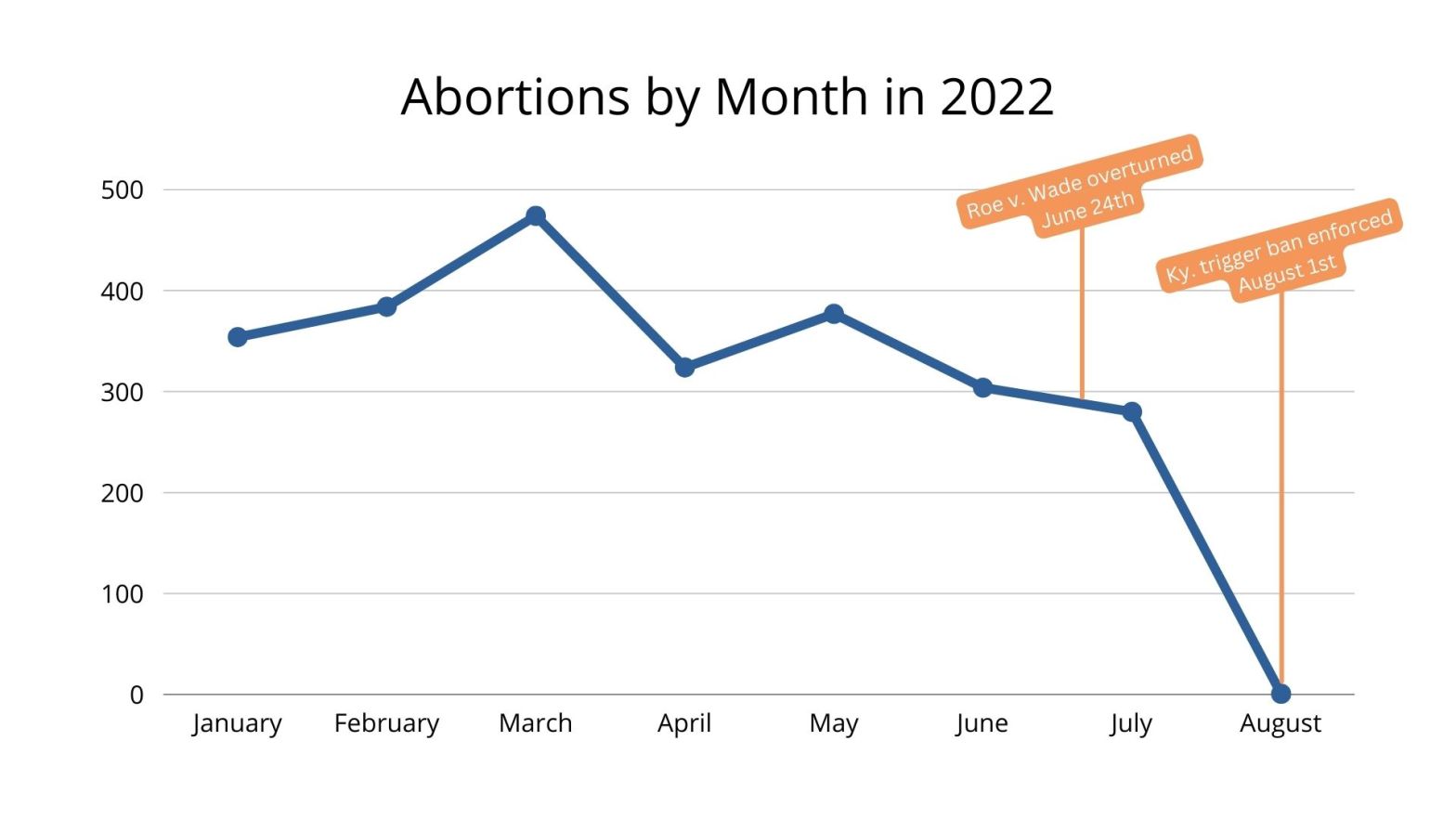
LOUISVILLE, Ky. (KT) – In August 2022, one life was lost to abortion in Kentucky. The sudden flatline follows an Aug. 1 order to reinstate the commonwealth’s trigger law, which banned elective abortion.
Under the law, abortions are permitted to protect the life and health of a pregnant woman. The exception allows physicians to perform an abortion if he or she decides, within “reasonable medical judgment,” that the abortion is necessary to prevent death, a substantial risk of death or serious damage to a life-sustaining organ of the pregnant woman.
The single surgical abortion in August was performed on a fetus at 20-weeks gestation, long after the cut-off provided by the state’s 15-week abortion ban and 6-week heartbeat laws that stack on top of Kentucky’s trigger ban.
August’s flatline follows a continual decrease in abortions since the Supreme Court overturned Roe v. Wade in their June 24 Dobbs v. Jackson decision. While the trigger law banned abortion in Kentucky immediately following the Dobbs decision, several court challenges paused the ban in late June and throughout July. A state appeals court overruled the injunction on Aug. 1 and the Kentucky Supreme Court later declined to block the trigger law, rendering abortion illegal.
While the seven justices of the court will hear oral arguments in the lawsuit against Kentucky’s trigger ban on Nov. 15, voters will have a say on the issue in the midterm elections.
Constitutional Amendment 2 is on the ballot Nov. 8, and the affirmation or rejection of the amendment will determine if the state’s abortion providers have a strong footing in claiming Kentucky’s constitution protects a right to elective abortion.
The amendment, as it appears on the ballot, reads: “Are you in favor of amending the Constitution of Kentucky by creating a new Section of the Constitution to be numbered Section 26A to state as follows: To protect human life, nothing in this Constitution shall be construed to secure or protect a right to abortion or require the funding of abortion?”
All data related to abortions provided in Kentucky are made available to the public through the Open Records Act.
 Friends of Life KY